
The Nine-Box Matrix - ProductFTW #59
When I first became a manager of a large team, I found it difficult to assess where each team member stood without comparing them directly to one another. Every individual had different strengths, weaknesses, and potential for growth, but figuring out how to evaluate their progress and make objective decisions about development was a challenge.
That was when a mentor of mine, Matthew, introduced me to the Nine-Box Matrix, a framework originally developed by McKinsey to help leaders evaluate employees based on both performance and potential. At first, I resisted the idea of putting people into boxes. It felt like I was reducing individuals to a grid. But after working with it, I realized that this framework is not about labeling people. It is about understanding where each person is and how to coach them toward growth.
Now, when I work with clients, I encourage them to use this matrix because it provides a structured way to evaluate talent, set expectations, and determine how to invest in employees. It is not just about identifying top performers. It is about understanding where everyone fits and what actions you, as a manager, need to take.
What is the Nine-Box Matrix?
The Nine-Box Matrix is a talent assessment tool that helps managers evaluate employees based on two dimensions:
- Performance: How well the employee executes their work, whether they exceed expectations, meet expectations, or consistently underperform.
- Potential: The employee’s ability to grow, take on more responsibility, adapt to change, and develop into future leadership roles.
These two dimensions create a three-by-three grid, with employees being placed into one of nine categories:
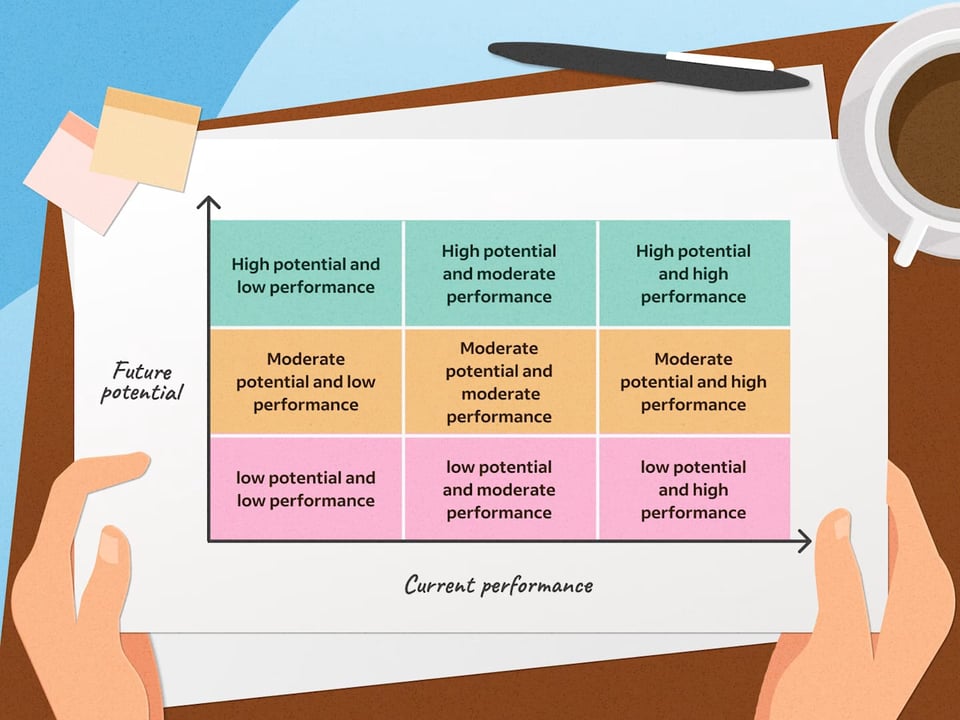
Understanding where employees fall in this matrix allows managers to make informed decisions about coaching, training, promotions, and succession planning.
Why the Nine-Box Matrix is Valuable for Managers
What I like most about this framework is that it shifts the focus away from simply ranking employees against each other and instead helps you assess what actions you need to take as a manager.
Most employee issues are not just about the individual. They are often the result of lack of coaching, unclear expectations, poor motivation, or external stressors. Instead of immediately assuming that someone is a bad fit, the Nine-Box Matrix helps identify where intervention is possible and how to support growth.
Here are a few ways this framework helps managers:
- Clarifies where each team member stands: Instead of a vague sense of who is excelling or struggling, the matrix provides a clear picture of each person’s position.
- Creates a coaching and development strategy: Every placement in the matrix should be followed by an action plan. Whether it is mentorship, training, new challenges, or compensation adjustments, this tool helps drive personalized development plans.
- Avoids promoting the wrong people: Not everyone who is high-performing is a future leader. Someone who has already reached their peak may be better suited for a specialist role rather than management.
- Encourages managers to take responsibility: If someone is underperforming, the first step is not replacing them. It is asking, "Have I given them the tools to succeed?" More often than not, performance issues can be addressed with better coaching, clearer expectations, or more support.
Breaking Down the Nine Boxes
Each of the nine placements in the matrix tells a different story about an employee’s current state and future potential.
1. High Potential, High Performance: Future Leaders
These employees exceed expectations and continuously improve. They are growth-oriented, adaptable, and take on challenges.
Next Steps: Invest in leadership training, stretch assignments, or opportunities to take on more responsibility.
2. High Potential, Moderate Performance: On Their Way Up
These employees have strong potential but need further development. They may need coaching or time to gain experience.
Next Steps: Offer mentorship, skill-building opportunities, or assignments that challenge them.
3. High Potential, Low Performance: Untapped Talent
These employees have the ability to grow but are struggling in their current role. The issue could be motivation, unclear expectations, or external challenges.
Next Steps: Identify what is holding them back. Provide targeted support and set clear expectations.
4. Moderate Potential, High Performance: Strong Contributors
These employees excel in their roles but may not have the ability or desire to move into leadership. They are valuable, even if they are not future executives.
Next Steps: Provide recognition and stability. Keep them engaged through meaningful work.
5. Moderate Potential, Moderate Performance: Steady but Limited Growth
These employees are consistent but do not show rapid improvement or growth potential.
Next Steps: Determine if they are happy where they are or if they need motivation to grow.
6. Moderate Potential, Low Performance: Needs Improvement
These employees are struggling, but they may be able to improve with coaching and motivation.
Next Steps: Work with them on skill-building, set clear goals, and provide direct feedback.
7. Low Potential, High Performance: Reliable but Limited Growth
These employees deliver excellent work but are unlikely to take on larger roles.
Next Steps: Ensure they feel valued and are given responsibilities that match their strengths.
8. Low Potential, Moderate Performance: Consistent but Not Growing
These employees meet expectations but do not go beyond that. They are steady contributors but unlikely to advance.
Next Steps: Keep them engaged in meaningful work, but do not expect leadership growth.
9. Low Potential, Low Performance: Potential Exit
These employees struggle to meet expectations and do not show growth potential.
Next Steps: If coaching and feedback do not lead to improvement, it may be time to consider a role change or separation.
The Nine-Box Matrix is a Tool, Not a Judgment
The most important thing to remember about the Nine-Box Matrix is that it is not a final verdict on an employee’s worth. It is a tool for identifying how you, as a manager, can help each person succeed.
A low-performing employee may not be struggling because they are bad at their job. They may need better training, clearer expectations, or a role that better aligns with their strengths. Likewise, a high performer may have hit their ceiling and need a new challenge to stay engaged.
When used correctly, the Nine-Box Matrix helps managers make objective, fair, and strategic decisions about their teams. It pushes leaders to think beyond performance alone and consider how to develop, motivate, and retain talent in the long term.
Good management is not just about identifying top talent. It is about unlocking potential wherever it exists.
About ProductFTW
ProductFTW is a weekly newsletter about product management, with a focus on real-life experiences in startups. We want to help product leaders be successful by giving realistic approaches that aren’t for giant tech companies. We know you don’t have a full-time product designer on each team. We know your software probably hasn’t been used by millions of people worldwide–yet. We’re here to bridge the content gap from building your product and team to scaling it.
Part of the Product Management Leadership & Career Guide — ProductFTW's collected essays on the PM role, leading without authority, hiring, and getting hired.